
Rewind!
Write your awesome label here.
Here is the presentation deck for you to review.
Here is the video from the session.
Session 2: Landscape Scan, Ideation
and Roadmap Reality Check
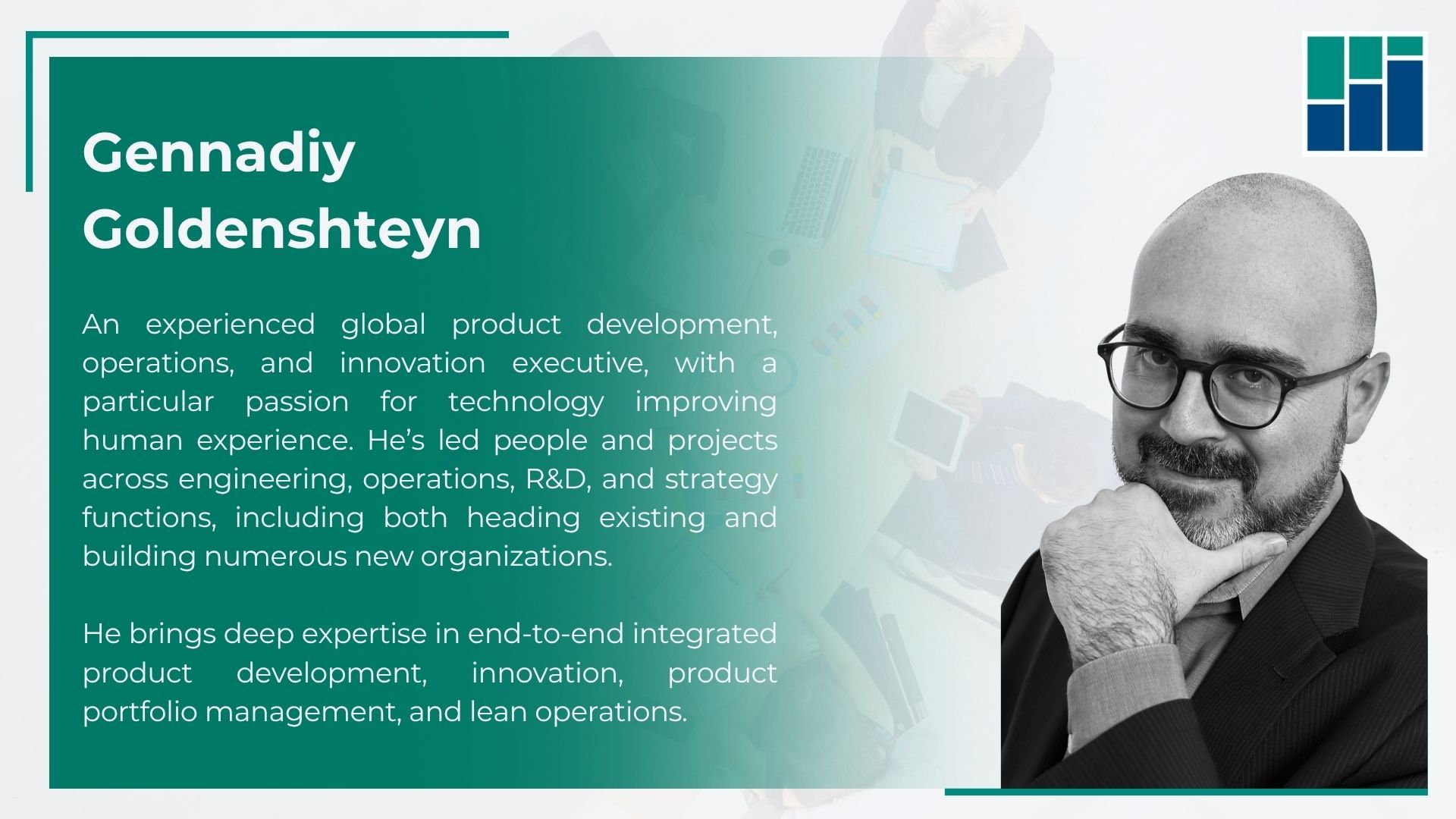
Facilitated by Holly Burrow (EQALL), with guest speaker Gennadiy Goldenshtyn.
Roadmap Clarity
Participants were reintroduced to concept that the roadmap is a practical tool for organizing existing work and preparing for Demo Day, not just extra homework.
Collaboration & Peer Feedback
Participants were encouraged to work together and share insights on each other’s projects helped broaden perspectives and fostered a supportive cohort environment.
Landscape Scan
The session emphasized mapping both obvious and non-obvious stakeholders, and understanding the difference between users and customers for effective solution design.
Practical Tools
Activities encouraged participants to quickly assess whether solutions matched problems, highlighting the importance of clear communication and iterative feedback.
Roadmap Development
Facilitators reinforced their commitment to technical and strategic support, encouraging participants to reach out, adapt processes, and work at their own pace toward final goals.
1. Roadmap & Demo Day Alignment
The session emphasized the importance of connecting the program’s roadmap to the Demo Day event. Participants were reminded that the roadmap is not “extra work,” but a way to organize existing efforts into a cohesive plan for stakeholder engagement.
“We are not giving you busy work, we are not giving you homework, we are not giving you things to do that are extraneous to actually building what the solutions that you're working on."
“We are not giving you busy work, we are not giving you homework, we are not giving you things to do that are extraneous to actually building what the solutions that you're working on."
The roadmap template (Word document) is available via Box, and participants should use it to structure their work. The final deliverable will be a pitch deck for Demo Day, but the Word document is the working template.
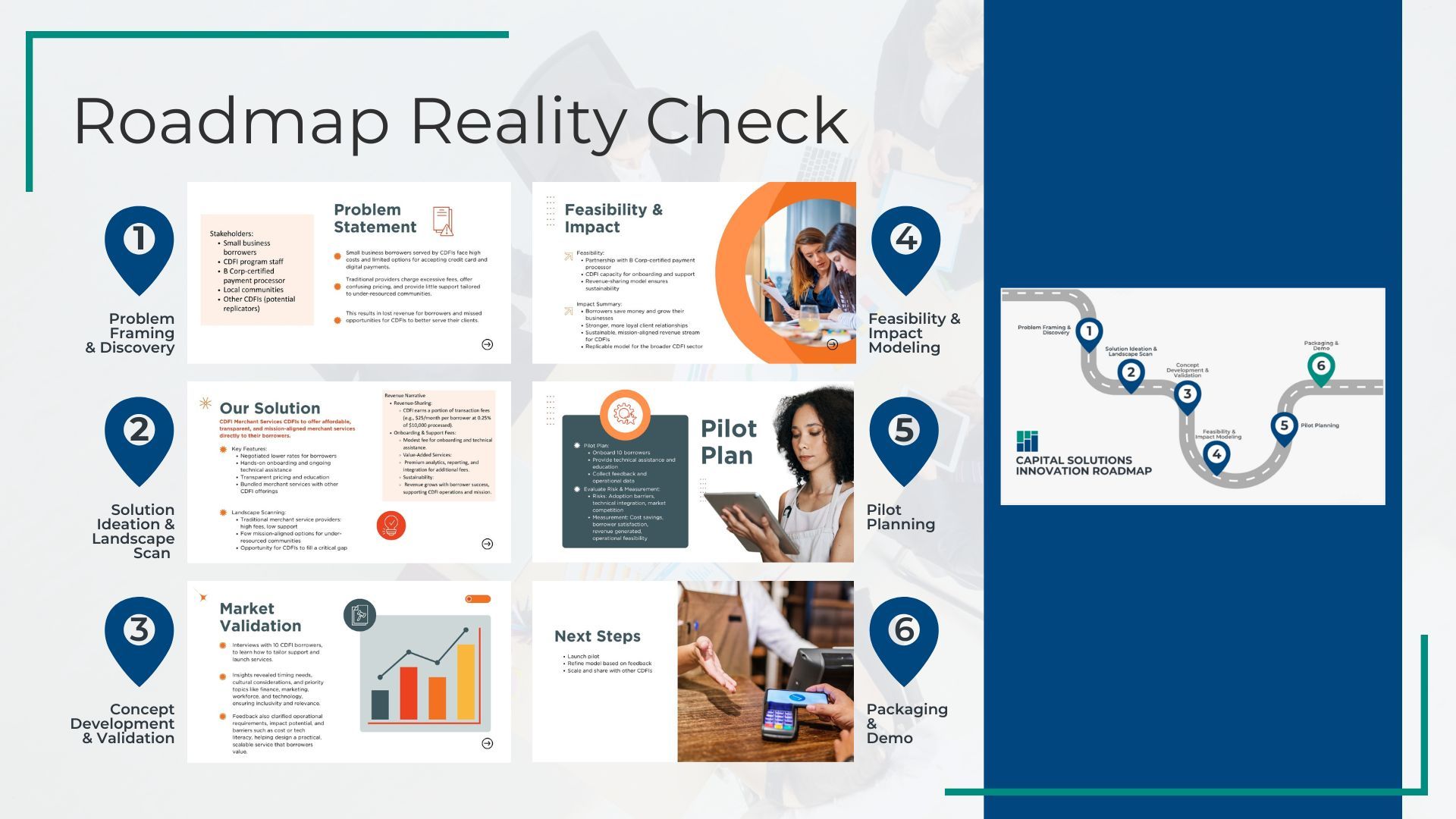
“This roadmap icon that we created is essentially a baseline pitch deck for Demo Day. Each one of these slides within this pitch deck maps directly to this roadmap.”
2. The Conversation: Summarized
What is a landscape scan and how do you get started?
What should be included in a stakeholder map?
Can you share an example of a failed idea and what you learned?
Can you dig a little deeper into User vs. Customer?
How do you think about testing in market versus paper prototypes?
How do you stay grounded in client needs while remaining ambitious and innovative?
How should participants approach validation outside their industry?
The conversation was an exchange of practical wisdom, personal anecdotes, and actionable advice on innovation, validation, and stakeholder engagement.
Both Holly and Gennadiy emphasized the need for clarity, adaptability, and external perspective in developing solutions that truly meet market needs.
3. Activity 1: Rapid Collaborative Landscape Scan
Purpose:
To help participants practice landscape scanning by identifying stakeholders, adjacent solutions, and perspectives for each cohort member’s problem/solution—beyond their own project.
How it worked:
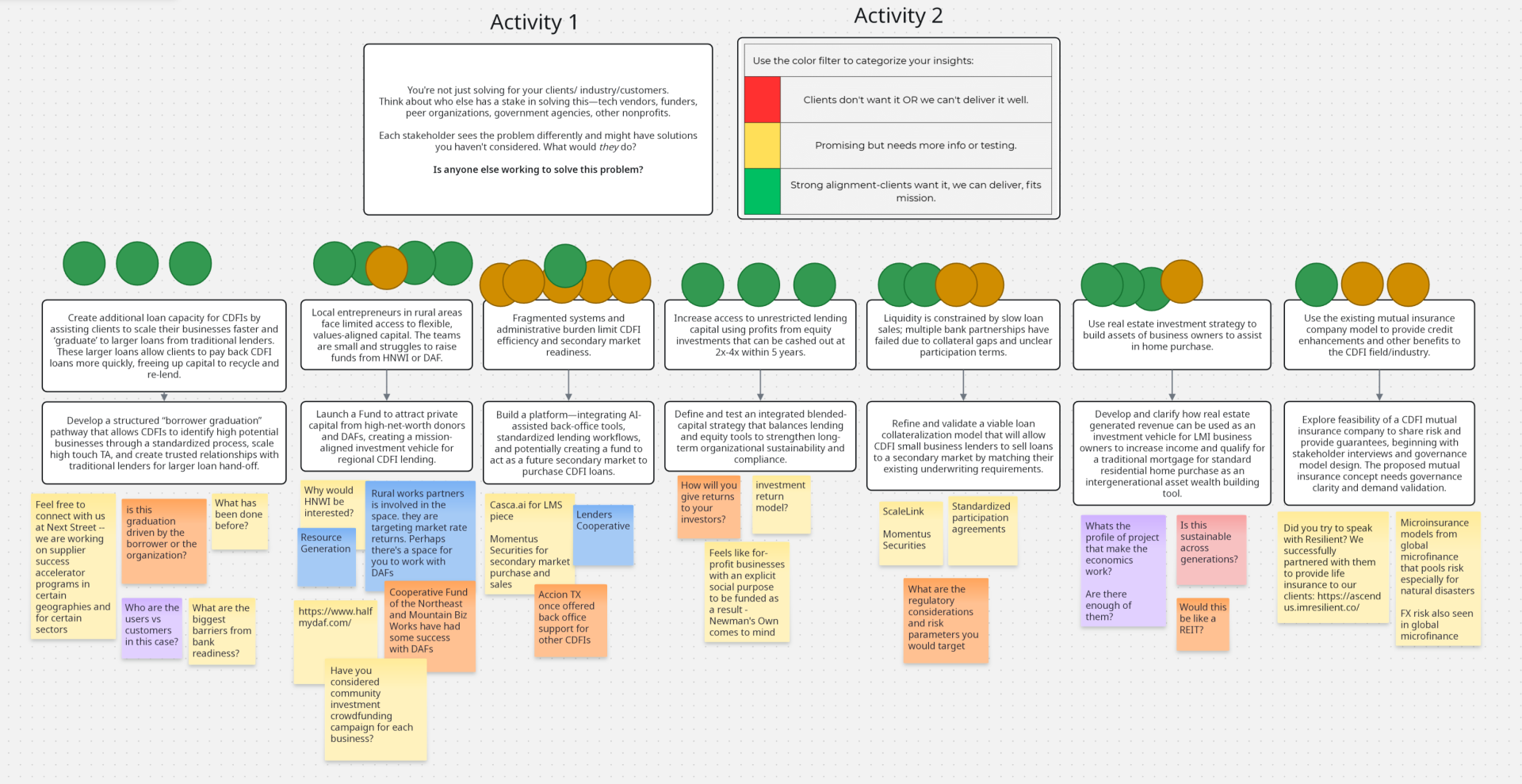
Each participant’s problem and solution statement was posted anonymously on a shared digital whiteboard.
- Everyone was asked to review all the statements (not just their own).
- Using sticky notes, participants added ideas for each problem/solution:
- Who else might have a stake in solving this problem?
- What other organizations, technologies, or approaches might be relevant?
- What perspectives or adjacent solutions could be considered?
The goal was to generate at least one suggestion for each posted problem/solution, encouraging broad thinking and peer feedback.
4. Activity 2: RAG (Red, Amber, Green) Validation Exercise
Purpose:
To help participants quickly assess whether each cohort member’s solution matches their stated problem, and to identify which ideas may need further research, refinement, or caution.
How it worked:
Participants returned to the shared whiteboard, where all problem/solution statements were posted.
Using colored dots (red, yellow/amber, green), each person flagged solutions:
- Green: Solution seems well-matched to the problem and feasible.
- Yellow/Amber: Solution may be hard to deliver, needs more research, or raises questions.
- Red: Solution is unlikely to work or is fundamentally mismatched (note: in practice, no reds were given).
Participants were asked to avoid voting on their own solution, and to base their assessment on the brief statements provided.
The exercise was intentionally rapid and high-level, simulating how stakeholders might make quick “go/no-go” decisions in real-world conversations.
5. Wrap Up
As the session wrapped up, the facilitators reiterated their commitment to supporting participants, both technically and strategically.
They encouraged everyone to reach out for help, complete a brief post-session survey, and keep working on their roadmaps at their own pace, with only the final deadline being fixed.
The overall message was one of flexibility, collaboration, and ongoing support as the cohort continues its innovation journey.
They encouraged everyone to reach out for help, complete a brief post-session survey, and keep working on their roadmaps at their own pace, with only the final deadline being fixed.
The overall message was one of flexibility, collaboration, and ongoing support as the cohort continues its innovation journey.